 The Professional Fellows Program on Disability and Civic Society
Beyond Borders: Shared Lessons in Disability Access & Belonging
Published: Nov 19, 2026
Country: Tanzania
Dr. Jessie Green's Outbound Fellowship Experience
Dr. Jessie Green is a US Outbound Fellow in the FY2023 Professional Fellows Program (PFP) on Disability and Civic Society. This program is sponsored by the US Department of State's Bureau of Educational and Cultural Affairs and is administered by the ICI at UMass Boston in partnership with the African Disability Forum (ADF). The following blog post was contributed by guest author Dr. Jessie Green.
Introduction
My name is Dr. Jessie Green, and I am an assistant research professor at The Ohio State University Nisonger Center in Columbus, Ohio. I have been an intervention specialist for transition-age youth in several public schools, and I've led a postsecondary education program for students with intellectual disabilities. Now, I bring these experiences together in my research around the outcomes of transition-age youth with disabilities.
Sadath Mwamsema traveled to The Ohio State University Nisonger Center in the fall of 2025 for his inbound fellowship experience with the Professional Fellows Program. Sadath is the cofounder of Community Development Watch (CODEWA). He developed the Shifting Narratives (SHINA) project to support children with albinism in Tanzania. Sadath was able to refine his project using what he learned from his time in Ohio. From my perspective, one of his biggest takeaways was that individuals need to have self-advocacy skills and understanding before they can successfully advocate to make larger change.
Some of my current projects include a community program aimed at building youths' self-advocacy skills to become active participants and leaders in their individualized education planning (IEP) or 504 meetings. Additionally, I direct a neuro-affirming social skills program for young adults that brings caregivers into the fold through community building and peer support, resource sharing, and future planning guidance. These two programs were instrumental in the refinement of Sadath's follow-along project.
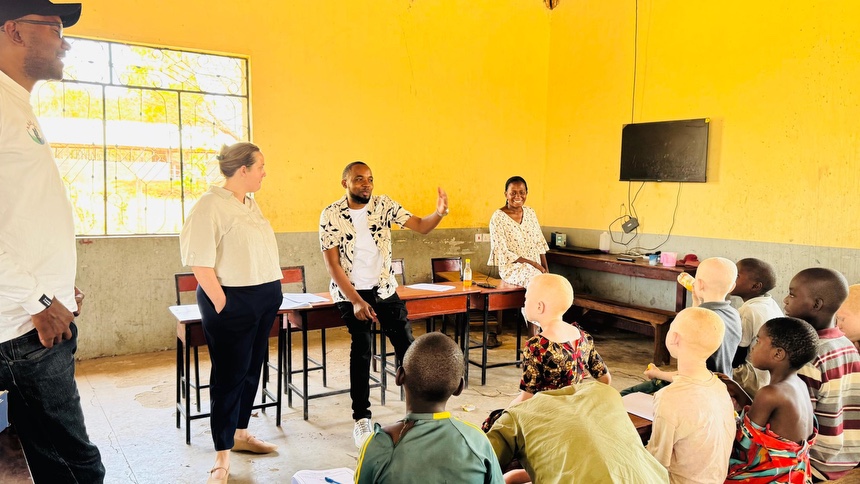
Figure 1: Sadath (third from left) presents the SHINA Project to children at Humura Secondary School in Tabora, Tanzania. Jessie (second from left) and staff from CODEWA and Humura (far left and far right) support.
In September 2026, I got to see Sadath put his SHINA project into action when I traveled to Tanzania for my PFP outbound fellowship (Figure 1). While the main goal of the trip was to pilot a training on self-advocacy for children with albinism, it was also an opportunity to engage schools in their practices of disability access, meet with community organizations to dialogue on commonalities and opportunities, and notably establish new relationships for Sadath to carry the SHINA project forward.
Exploring Disability Access in Tanzania
The fellowship provided a chance for Sadath and I to learn from organizations engaged in the disability accessibility work in Tanzania. We met with Shirikisho la Vyama vya Watu wenye Ulemavu Tanzania, referred to as SHIVYAWATA; Chama cha Walemavu Tanzania, known as CHAWATA (Figure 2); and People with Disabilities Can Make It, or PEDICAMA.
These visits were an opportunity to learn about the current priorities of these non-governmental organizations (NGOs) and what barriers they face to meeting their missions as well as to share insights on how we meet similar needs and address barriers in the US.
SHIVYAWATA is responsible for bringing many disability focused organizations under one umbrella to have one unifying message across the country. We discussed how the SHINA project out of CODEWA could get involved with this federation given CODEWA is not a disability specific organization.
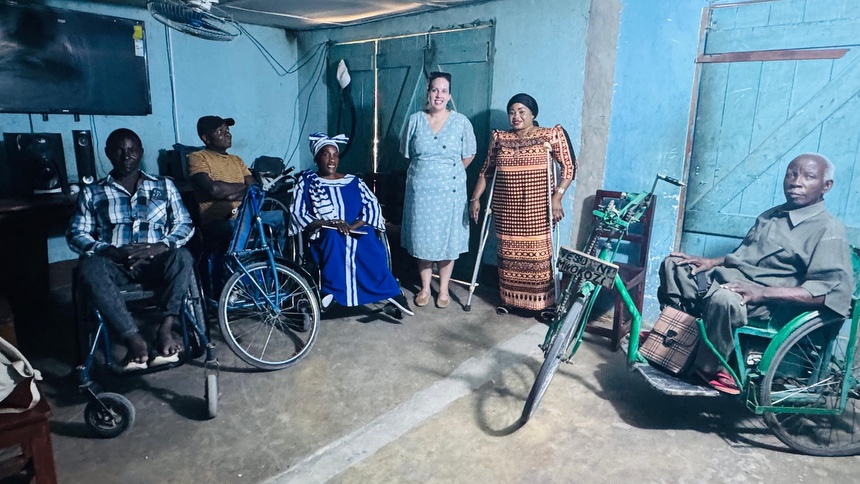
Figure 2: Jessie (fourth from left) meets with CHAWATA Board members.
Barriers CHAWATA faces are the misconceptions people have and even shame people feel about disability. CHAWATA does a lot of work around community awareness of physical disability and addressing these misconceptions. I was able to share about a disability-specific non-profit program local to my area that will deliver information and a care package to families in the hospital who have just birthed a baby with specific physical disabilities.
Leadership from PEDICAMA discussed the challenges of securing consistent funding while working to meet significant community needs. These meetings were my most thought-provoking, but not necessarily the most comfortable. In several conversations, organizational leaders quickly shifted discussion toward their funding needs. Initially, I was uncertain how to respond. Over time, I came to better understand the context in which many disability-serving organizations operate. The requests were not simply about resources; they reflected the daily challenge of sustaining services, supporting staff, and creating opportunities for people with disabilities. These interactions deepened my appreciation for the complex relationships between advocacy, community impact, and organizational sustainability faced in both Tanzania and the US.
The Power of Relationships
One of the highlights for me of our work in Tanzania was visiting Al Muntazir Special Needs School (AMSEN) in Dar es Salaam. The Deputy Principal, Bijal Lal, was a 2019 PFP Fellow at the Nisonger Center with Dr. Margo Izzo as her mentor. Then in 2021, when Bijal was a teacher at AMSEN, she worked with the Nisonger LEND program to run a virtual ECHO (Extension for Community Healthcare Outcomes) training in Tanzania for teachers and staff to become more accessible schools. Being able to finally visit her school, which I had heard so much about, was an example of how relationships built across borders can deepen understanding and create lasting connections.
While at AMSEN, I received a tour of their facilities to see what opportunities these students had. These classrooms closely resembled US schools yet still could have benefited from more resources. The staff and students were so welcoming. In fact, one of their students invited me back to explore Tanzania together! The staff and leadership have so many ideas.
I was asked to give a talk at AMSEN for the staff on a topic of my choosing. Preparing for this talk was tough, as I did not have a full grasp of their needs, what they were already doing, or what would be most beneficial. Given many conversations with others in the country around the topic of the national exams all students must take in Year 7, I wanted to focus on how students can show what they know despite their disability.
I started with overviewing Universal Design for Learning (UDL). This idea was new to staff; I was able to connect concrete examples I saw in their classrooms to the UDL framework. We then discussed academic accommodations, particularly for students who are in what they US would call the general education curriculum. Finally, I shared about modifications. Unbeknownst to me, this is an area they have struggled with for some time, as their school is a part of a school using the Cambridge curriculum. I was able to share how Ohio has created extended learning standards for our students with the most significant needs, providing access to grade level content standards. This induced an "aha" moment that can hopefully begin to solve a long-standing barrier they face.
Personal and Professional Growth
Since returning to the US, I am already sharing lessons I learned with others. One of the most valuable professional lessons I brought back with me ties both the personal and professional experiences I had in Tanzania. We are lucky in the US to have an extensive disability support infrastructure from federal and state policy and funding mechanisms coupled with an incredible non-profit network.
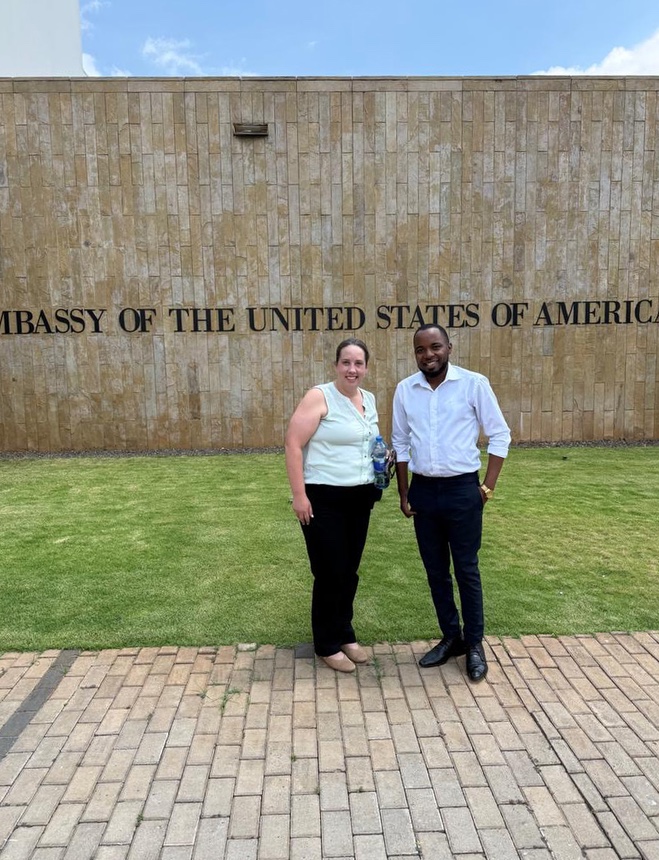
Figure 3: Jessie (left) and Sadath (right) visit the US Embassy in Dar es Salaam to share about their outbound experience and impact.
Traveling to the other side of the world stretched me far outside my comfort zone but helped me have far more empathy for folks with disabilities and their families who arrive in the US to a massive system of support. Until this visit, I never understood why some families I worked with were so hesitant to receive help. What I once interpreted as reluctance, I now recognize as the lasting effect of social shame and the challenges families face when seeking support in environments where disability has often been misunderstood or hidden.
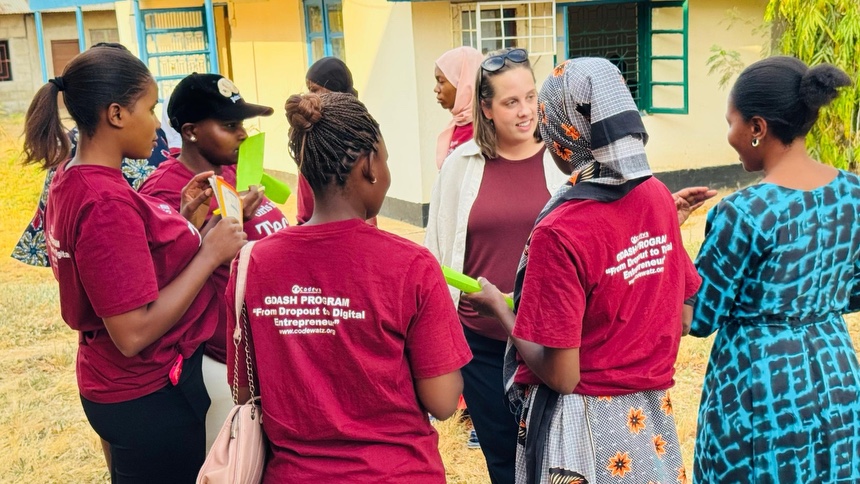
Figure 4: Jessie (center, wearing a burgundy top and beige shirt, facing the camera) works with five women from CODEWA's Digital Skills Hub on a leadership activity at CODEWA. Jessie listens as the group describes how materials from their surrounding environment represent leadership.
While in Tanzania, I worked with young women as part of a digital skills curriculum project CODEWA has supported in the last year (Figure 4). While this program was not specifically targeting women with disabilities, CODEWA would like to pilot having a participant with a disability in a future cohort.
Sadath has built a model in the SHINA project equipped to support youth with albinism that could be easily adapted for other disabilities and in other settings. Sadath and I were able to meet with a second orphanage in Tabora, where he hopes to launch the SHINA project.
While I traveled to Tanzania hoping to share knowledge and learn new approaches to disability access, I returned home with something even more valuable: a deeper appreciation for the power of community, the importance of listening to people from all over the world, and the shared commitment that unites advocates for disability access and belonging across the globe.