 The Professional Fellows Program on Disability and Civic Society
Building Self-Advocacy Through Global Collaboration: The iRISE Self-Advocacy Toolkit for Persons with Down Syndrome and Intellectual and Developmental Disabilities
Published: Jul 07, 2026
Country: Kenya
Dr. Evan Borisinkoff's Outbound Fellowship Experience
Dr. Evan Borisinkoff is a US Outbound Fellow in the FY2023 Professional Fellows Program (PFP) on Disability and Civic Society. This program is sponsored by the US Department of State's Bureau of Educational and Cultural Affairs and is administered by the ICI at UMass Boston in partnership with the African Disability Forum (ADF). The following blog post was contributed by guest author Dr. Evan Borisinkoff.
Introduction
From April 13–24, 2026, I traveled to Nairobi, Kenya, through the Professional Fellows Program on Disability and Civic Society to collaborate with Roselyne Mburu, program coordinator for the Down Syndrome Society of Kenya (DSSK). Together, we worked to pilot and refine the iRISE Self-Advocacy Toolkit, a practical resource designed to help persons with Down syndrome and other intellectual and developmental disabilities build self-determination, self-advocacy, communication, and future planning skills.
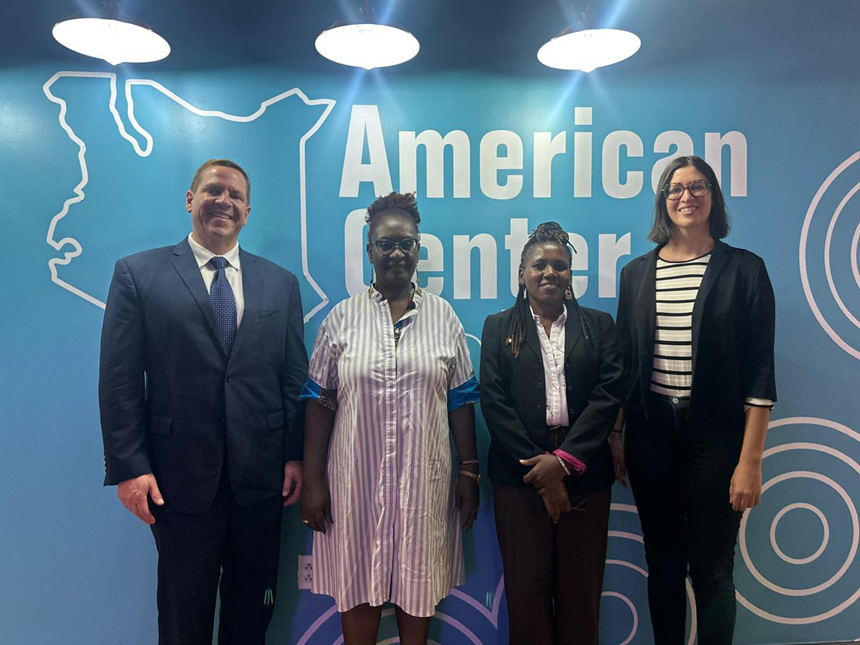
Figure 1: US Outbound Fellow Dr. Evan Borisinkoff of Minot State University (left), PFP Alumna Roselyne Mburu of the Down Syndrome Society of Kenya (DSSK) (second from right), and US Embassy Nairobi staff members Halima Gichuki (second from left) and Leah Schulz (right) pose together for a group photo.
As a professor in the Department of Education and Inclusive Services at Minot State University and a Board-Certified Behavior Analyst, I have spent much of my career supporting individuals with disabilities, their families, and educators. Roselyne has dedicated her work to advancing inclusion and advocacy opportunities for persons with Down syndrome throughout Kenya through DSSK's national network of families, self-advocates, and community partners.
Our collaboration focused on strengthening the toolkit through feedback from people with a vested interest in Down syndrome advocacy, expanding partnerships, and exploring sustainable approaches for future implementation throughout Kenya. What emerged was far more than a toolkit review process. It became a meaningful exchange of ideas, perspectives, and experiences that reinforced the importance of global collaboration in advancing disability inclusion.
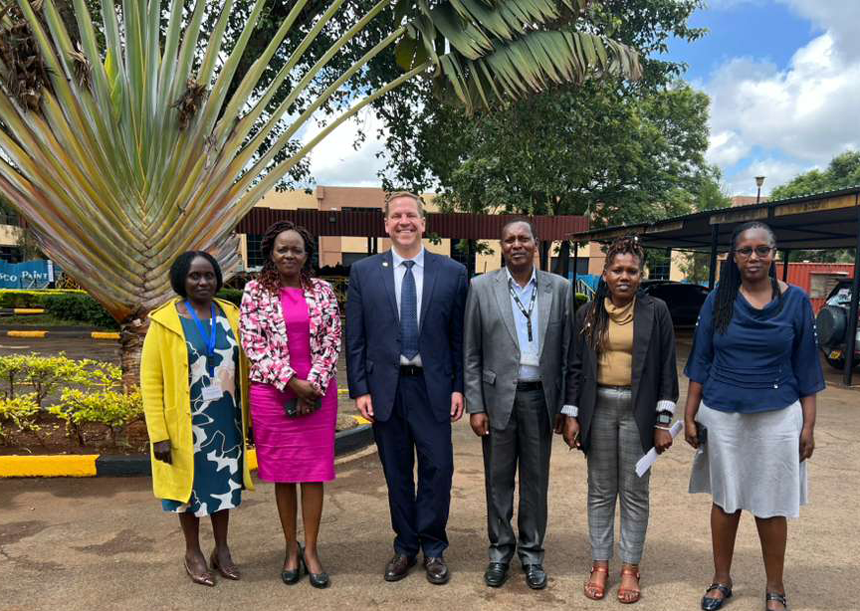
Figure 2: Representatives from the Kenya Institute of Special Education (KISE) Programs Team, led by Programs Deputy Director Daniel Sanoe (third from right), pose with US Outbound Fellow Dr. Evan Borisinkoff of Minot State University (third from left) and PFP Alumna Roselyne Mburu of the Down Syndrome Society of Kenya (DSSK) (second from right).
Purpose and Goals of the Outbound Project
The primary purpose of the outbound project was to pilot the iRISE Self-Advocacy Toolkit and gather meaningful feedback from self-advocates, families, educators, university faculty, students, disability organizations, and community members.
Our goals included:
-
Evaluating the usability and relevance of the toolkit in Kenyan contexts
-
Collecting social validity feedback from persons with disabilities, families, educators, and advocates
-
Identifying opportunities to improve accessibility and engagement
-
Building partnerships with universities, schools, and disability organizations
-
Exploring sustainable implementation models through training and community dissemination
-
Strengthening advocacy efforts that promote self-determination and inclusion for persons with intellectual and developmental disabilities
Rather than assuming the toolkit was complete, we approached the project with a commitment to listening and learning. We wanted participants to identify both strengths and areas for improvement so future versions would be more practical, accessible, and impactful.
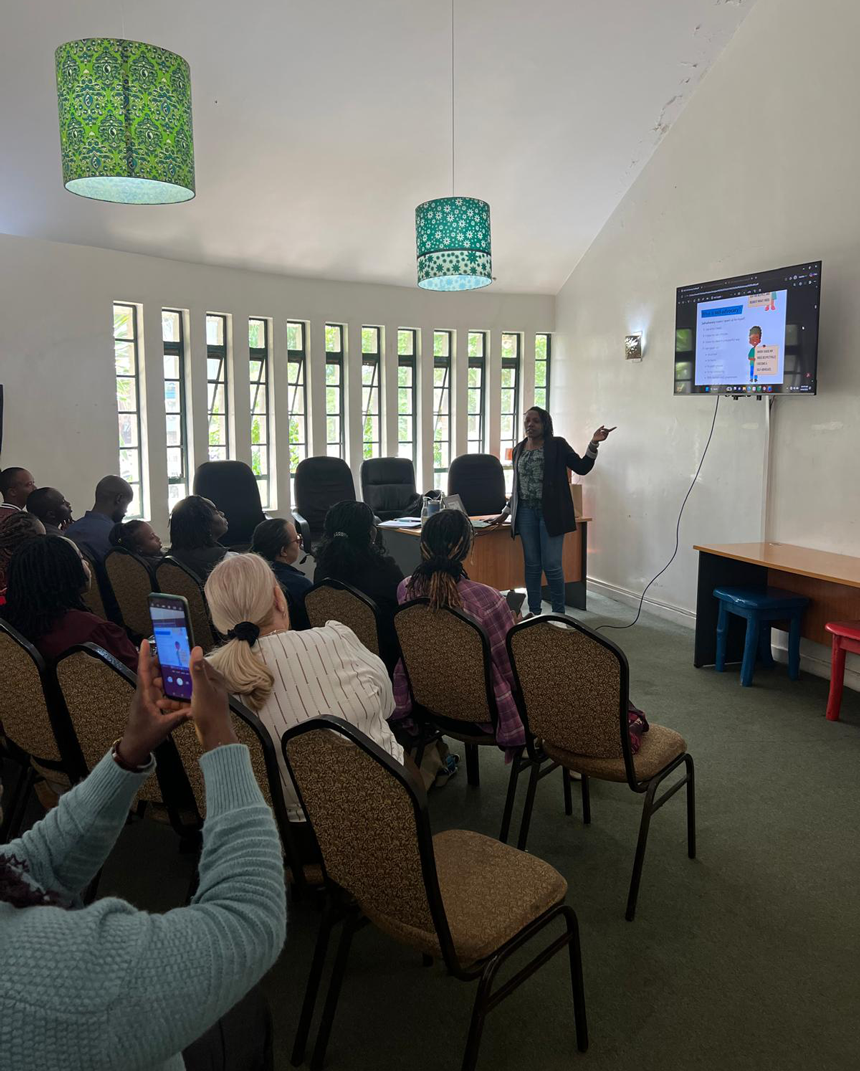
Figure 3: PFP Alumna Roselyne Mburu of the Down Syndrome Society of Kenya (DSSK) delivers a presentation during an iRISE Self-Advocacy Toolkit pilot session, conducted as part of the outbound collaboration with US Outbound Fellow Dr. Evan Borisinkoff of Minot State University at the August 7th Memorial Park in Nairobi.
Key Activities and Accomplishments
Throughout the visit, we engaged with a wide range of key partners across education, disability advocacy, government, and community organizations.
We met with staff from the US Embassy Nairobi to discuss disability inclusion and opportunities for international collaboration. We also held productive discussions with leadership from the Kenya Institute of Special Education (KISE), exploring ways self-advocacy concepts could complement existing disability support initiatives.
One of the most important activities was piloting the toolkit with members of the DSSK. Participants included self-advocates, parents, educators, and community members. Their feedback was thoughtful, practical, and highly encouraging.
Several participants shared that while self-advocacy concepts had been discussed previously, they had never seen them organized into a practical framework that families and educators could immediately begin using.
We also met with faculty and students at Kenyatta University, including second-, third-, and fourth-year special needs education students and faculty members. The discussions generated valuable recommendations, and several students expressed interest in volunteering to support future development efforts.
At the University of Nairobi, we met with the dean of the faculty of education and a faculty member from the psychology department. Discussions focused on disability inclusion, higher education partnerships, and emerging opportunities to integrate technology and artificial intelligence into future versions of the toolkit.
Additional activities included visiting Waldorf School, an inclusive educational setting where we discussed practical classroom applications of the toolkit and received feedback from practitioners working directly with learners with disabilities.
Throughout these engagements, participants consistently emphasized the importance of making the toolkit more interactive and accessible. Suggestions included incorporating visual supports, role play activities, digital resources, artificial intelligence applications, short video demonstrations, and cartoon-style learning supports.
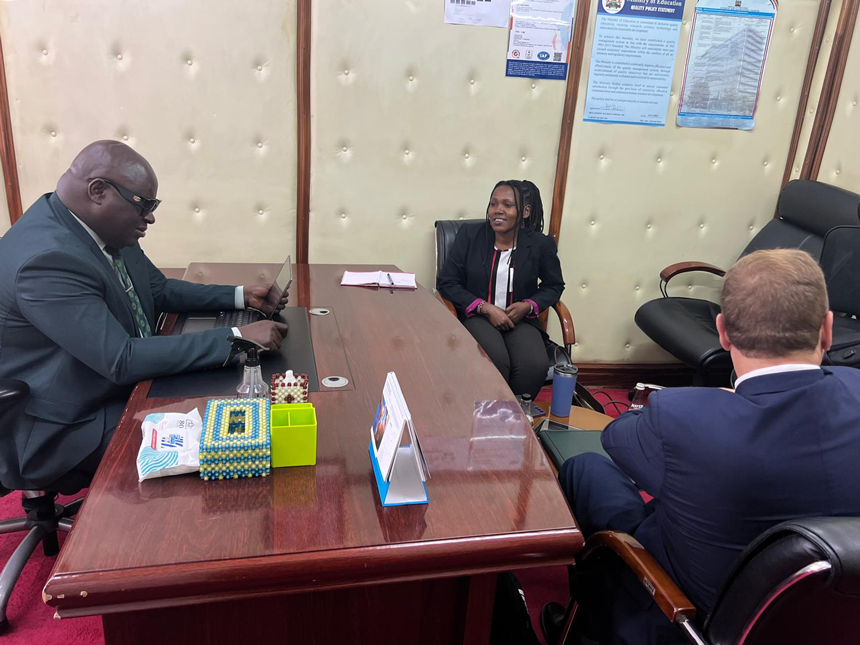
Figure 4: Meeting between US Outbound Fellow Dr. Evan Borisinkoff of Minot State University (back to camera), PFP Alumna Roselyne Mburu of the Down Syndrome Society of Kenya (DSSK) (center), and Hon. Fredrick Haga of the Directorate of Special Needs Education, Ministry of Education, Kenya (left) at Harambee House to discuss inclusive education and the iRISE Toolkit.
Reflective Insights and Lessons Learned
One of the most important lessons from this experience was recognizing the value of collaborative development.
As co-developers, Roselyne and I entered the project understanding that meaningful feedback would strengthen the toolkit. Participants did not hesitate to offer constructive suggestions, and those recommendations became one of the most valuable outcomes of the project.
The experience reinforced that successful disability initiatives require broad participation from self-advocates, families, educators, community leaders, and professionals. Many of these key partners viewed the toolkit not as a finished product but as a foundation that could continue evolving through collective input.
Professionally, the experience challenged me to embrace a more facilitative role. Rather than directing every aspect of development, I learned the importance of creating space for others to shape the project. This collaborative approach generated stronger ideas and greater ownership among participants.
The project also highlighted the power of international partnerships. Individuals from universities, disability organizations, schools, and community groups expressed interest in supporting future development efforts, demonstrating that meaningful change often occurs when diverse perspectives come together around a shared purpose.
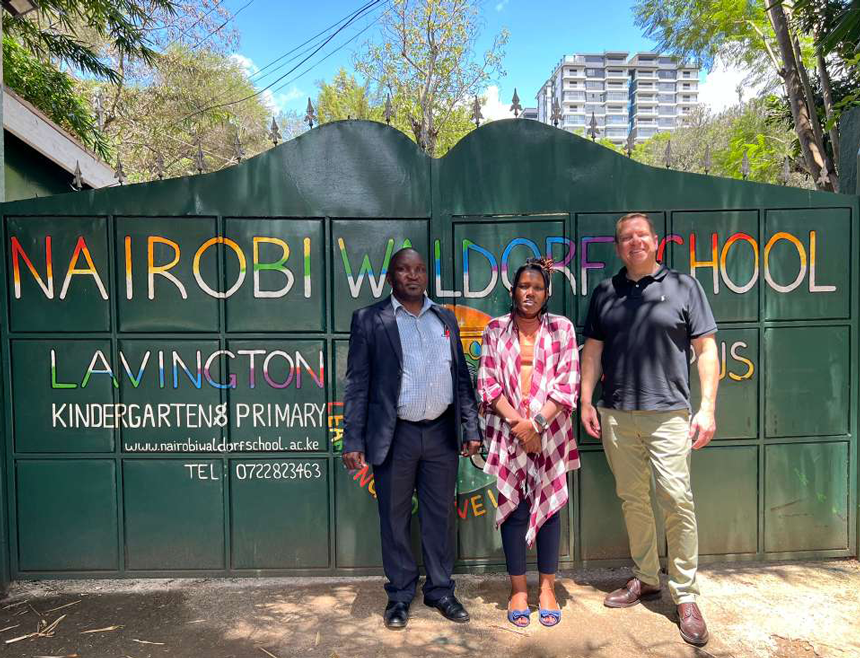
Figure 5: US Outbound Fellow Dr. Evan Borisinkoff of Minot State University (right) and PFP Alumna Roselyne Mburu of the Down Syndrome Society of Kenya (DSSK) (center) meet with Josphat Gogani, special needs coordinator at the Nairobi Waldorf School.
Cultural Exchange and Personal Growth
The outbound experience provided continuous opportunities for cultural learning and exchange.
Although I had previously visited Kenya with the PFP program, returning after several years offered a fresh perspective. Nairobi's expanding infrastructure, growing skyline, and continued development reflected a country experiencing significant change and growth.
Beyond professional activities, I had opportunities to attend church services, spend time with Roselyne and her family, and experience daily life within local communities. These experiences provided important context for understanding the cultural values, relationships, and community structures that influence disability advocacy efforts in Kenya.
What stood out most was the warmth, hospitality, and genuine commitment people demonstrated toward improving opportunities for persons with disabilities. Participants consistently engaged with enthusiasm and optimism, creating an environment that encouraged open dialogue and meaningful collaboration.
The experience reinforced that while disability systems may differ across countries, the desire for inclusion, dignity, self-determination, and opportunity is universal.
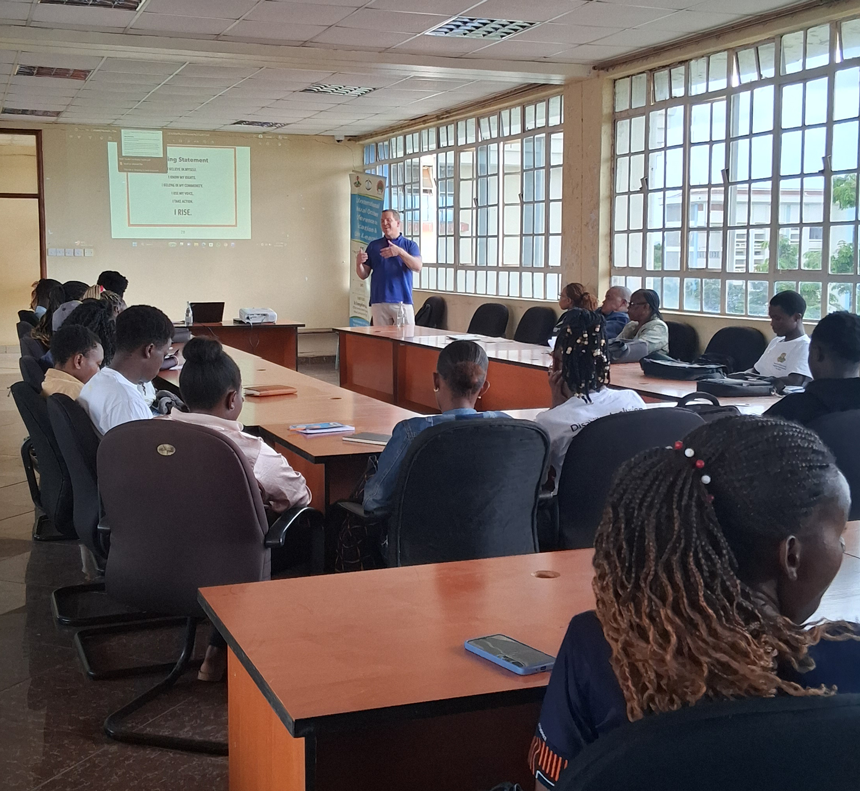
Figure 6: US Outbound Fellow Dr. Evan Borisinkoff of Minot State University presents to pre-service teachers and faculty members from the Kenyatta University Department of Special Needs Education during a session introducing the iRISE Self-Advocacy Toolkit and approaches to supporting inclusion and self-advocacy among learners with intellectual disabilities.
Future Plans and Sustainability
The project has created a strong foundation for continued collaboration between DSSK, Minot State University, and future partners.
The next phase will focus on incorporating key partner feedback into Version 2 of the iRISE Self-Advocacy Toolkit. Once we complete the revisions, we will disseminate the updated toolkit alongside a social validity survey developed to gather additional feedback from both previous participants and new audiences.
A key component of future implementation will be the Training of Trainers model.
The Training of Trainers approach is particularly important in Kenya due to the limited availability of specialized personnel and resources. By equipping volunteer trainers through DSSK satellite groups, the toolkit can reach a much larger audience of parents, caregivers, educators, and self-advocates across the country. This model will extend the impact of the toolkit beyond individual workshops and into homes, schools, and communities, including rural and underserved regions.
DSSK plans to pilot the revised toolkit through satellite groups in regions including the Coast Region, Trans-Nzoia, and Eldoret. Feedback from these pilots will help strengthen implementation and support future advocacy efforts.
Future dissemination efforts will also explore opportunities for conference presentations, scholarly publications, policy discussions, and expanded partnerships with universities and disability organizations.
Perhaps most importantly, future development will continue to center the voices of persons with Down syndrome and other intellectual and developmental disabilities. The principle of "Nothing About Us Without Us" remains central to the project and will guide future revisions and implementation efforts.
One participant captured the spirit of the project best when they shared:
"The toolkit is so easy to use that even people without disabilities can use it to help align their future goals and aspirations."
That feedback reflects our ultimate goal: creating a practical, accessible resource that empowers individuals to advocate for themselves, pursue meaningful goals, and participate fully in their communities.